
Came into effect in December 2024, the CRCF regulation (for the Carbon Removal and Carbon Farming Framework) establishes for the first time a common standard for certifying carbon credits at a European level. This text is of key importance for sectors seeking to finance the transition of their agricultural upstream towards low-carbon farming, as well as for companies that are buying ccredits to honour their climate commitments.
Here's what needs to be understood about the CRCF, in order to anticipate its implementation now.
The need for a common framework for the European carbon market
For several years, agricultural carbon credits have been developing based on various standards. Low-carbon label in France, Gold Standard You Will come internationally, as well as numerous other national or private systems, form the main frameworks. Each has its own methodologies, its own registers, its own levels of requirement. For agricultural sectors and companies purchasing these credits, this fragmented landscape raises questions. How can projects certified under different rules be compared? How can their purchases be justified to stakeholders who are increasingly scrutinising communication and risks? Greenwashing ?
Regulation (EU) 2024/3012, also known as the CRCF Framework for Carbon Removal and Carbon Farming, adopted on 27 November 2024, answers this question. It does not replace existing standards but creates a common European reference. However, it remains a voluntary framework, destined to impose itself.
Two complementary CRCF texts are already in force or in the process of being adopted: Implementing Regulation 2025/2358 on certification schemes and audits (November 2025), and the delegated act on certification methodologies of the carbon farming, whose draft was published in January 2026 and for which adoption is expected by the end of 2026.
The CRCF and its connection to low-carbon agriculture carbon farming
The regulation distinguishes three categories of certifiable activities:
- The permanent carbon absorptions Industrial technologies (DAC, BECCS, biochar) storing carbon for several centuries.
- The carbon farming (Agricultural carbon storage): agricultural and forestry practices that sequester carbon in soil and biomass, or reduce greenhouse gas emissions.
- The Carbon storage in products Long-lasting: timber construction, bio-based materials (at least 35 years of storage).
The carbon farming directly concerns agricultural sectors, as well as a majority of European projects. The delegated act, which is currently being finalised, identifies three types of priority practices: agriculture and agroforestry on mineral soils (most cases, in opposition to organic soils such as peatlands), restoration of peatlands and organic soils, and afforestation.
For agriculture, eligible practices include, among others: the establishment of cover crops, the extension of crop rotations, agroforestry, the introduction of legumes, the optimisation of mineral fertilisation, the management of organic fertilisers, or changes in nitrogen form. Several practices can be combined within the same certified activity. This corresponds to the integrated approach that we deploy at Carbone Farmers., within our efforts with the agricultural sectors.
The four criteria for an agricultural carbon credit CRCF
To be CRCF certified, an activity must satisfy four cumulative criteria. Methodological quality is therefore the primary condition for market access.
1️⃣ Robust quantification
Absorptions and emission reductions must be measured precisely and transparently, combining ground measurements, remote sensing and modelling. The delegated act provides for three approaches: Tier 3 models, field measurement-remesurement with standardised sampling protocols, and default emission factors. Finally, an uncertainty factor is systematically deducted from the calculated quantities. The quantification of this uncertainty is at the heart of the calculation models, with significant discounts foreseen.
Concretely, this means that theoretical estimations are not enough. Scientifically validated models are needed to process field data.
2️⃣ Additionality
An activity is only certifiable if it goes beyond existing regulatory obligations, and if certification is necessary to make it financially viable. There can be no carbon credits for a project that would have happened anyway. The additionality condition has two components: a regulatory test (the activity must not be legally imposed) and an incentive effect test (certification must change the operator's behaviour).
The regulation provides for an important derogation for «early movers» Operators that started their activity between January 2023 and December 2027 can benefit from retroactive recognition. This is an opportunity for sectors and farmers already engaged in low-carbon initiatives, provided they register within the CRCF framework before the end of 2030.
3️⃣ Long-term storage and accountability mechanisms
Operators must demonstrate that carbon is being stored sustainably and put in place accountability mechanisms in case of accidental releases.
The delegated act provides two options:
- un Buffer pool collective managed by the certification scheme (i.e. a buffer reserve, meaning credits set aside to offset potential destocking)
- or taking out insurance
The periods of activity vary depending on the practices: 5 renewable years for agricultural practices (up to 4 renewals possible, making 20 years in total), 30 years for agroforestry.
4️⃣ Sustainability and environmental co-benefits
All agricultural carbon storage activities must generate co-benefits for the environment, biodiversity, or soil health. This is an eligibility requirement, therefore not optional.
The operator can demonstrate these co-benefits by drawing on scientific literature, aligning with national nature restoration plans, or contributing to the improvement of the condition of a habitat of European interest. Additional co-benefits (water, air, circular economy) can be voluntarily declared and commercially valued.
What the CRCF changes for sectors wanting to develop low-carbon agriculture
The CRCF acts as a lever to structure the agricultural transition approaches of cooperatives, collectors, industrialists, processors, and distributors.
Operator groups at the heart of the system
The regulation explicitly recognises producer organisations (co-operatives, producer organisations, producer groups) as operators eligible for certification. Thus, a co-operative can undertake a CRCF project on behalf of its members, manage the collective activity plan, and benefit from a group audit. This is a cost-sharing mechanism for certification directly integrated into the regulation.
Compatibility with Scope 3 data
The data produced as part of a CRCF certification are designed to be compatible with the GHG Protocol (Scope 3 data) and the requirements SBTi FLAG, which are increasingly being applied to agricultural value chain companies for the reporting of their indirect emissions. This allows them to prepare for reporting obligations that are strengthening year on year (CSRD, Green Taxonomy, among others).
Cumulation with public aid: a new financing model
The regulation explicitly authorises combining CRCF certification with public aid (PAC, state aid), provided that the certified scope exceeds that of the aid in terms of duration, surface area, number of practices, or climate ambition (i.e. adherence to additionality). This change paves the way for co-financing models where sector premiums, carbon credits, and PAC aid can be combined to cover transition costs.
Concrete example: the Hauts-de-France project Carbone Farmers
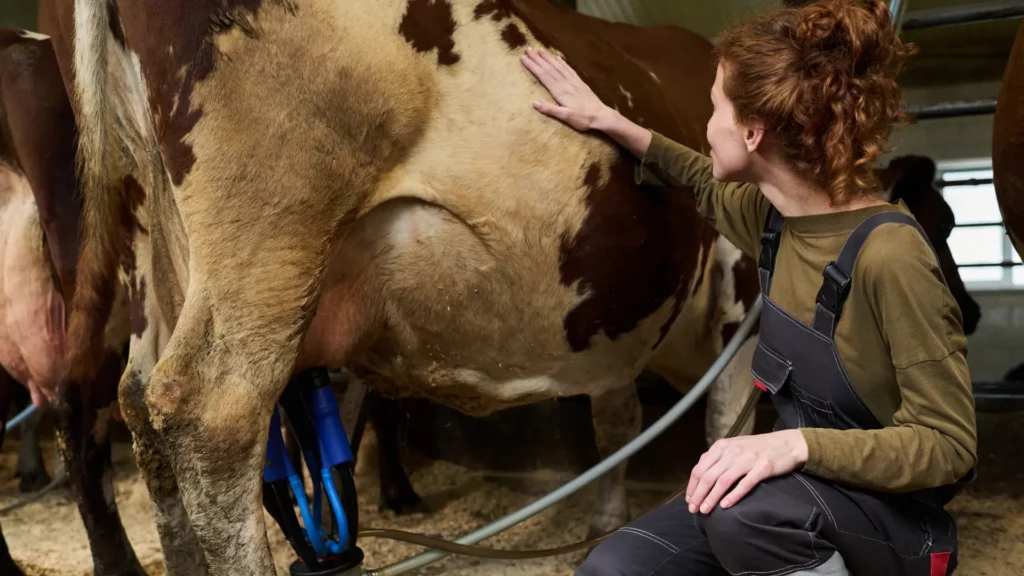
In our project in Hauts-de-France, 48 mixed farms are supported by three cooperatives (La Prospérité Fermière, Unéal and Tereos) in a low-carbon farming approach. On each farm, a single transition action plan covers both crop and livestock enterprises. Sectoral premiums on milk and sugar beet finance part of the transition, with carbon credits covering the rest. This is the co-financing logic that the CRCF is encouraging at a European level.
What the CRCF changes for buyers of carbon credits
For CSR teams and leaders purchasing carbon credits as part of their overall net-zero commitments, the CRCF offers answers to their questions and concerns, particularly regarding greenwashing.
An independent audit and a public register
The regulation requires an initial audit by an accredited certification body before the start of the activity, followed by new certifications at least every five years. Audit reports and certificates of conformity are published in the certification register, and then in the public European register, the establishment of which is planned by December 2028. Each certified unit is traceable and can only be used once to prevent double accounting.
The Buyer's Club: An Institutional Demand Signal
To support market development, the European Commission has announced the establishment of a EU Buyer’s Club. This voluntary initiative aims to aggregate private demand for CRCF credits to give project developers long-term visibility and enable them to invest. The objective is to create a stable demand signal before regulatory obligations become widespread. For buyers, joining this collective mechanism allows them to secure access to high-quality credits while helping to build the European market.
The CRCF is currently being studied as a technical basis for the future integration of permanent removals into the EU ETS. A Commission report on this subject is expected in July 2026. Buyers aligning with the CRCF now through the Buyers' Club are positioning themselves on an asset that could tomorrow become a regulatory compliance instrument.
The end of the vagueness on additionality
As we previously highlighted, the additionality test is documented and mandatory, in addition to being audited. This gives buyers the assurance that the credits they purchase genuinely finance the transition, and that these finances are necessary for project developers.
What does Carbone Farmers offer to agricultural sectors and credit buyers, within the framework of the CRCF?
Carbone Farmers was established in 2022 with the conviction that the agricultural transition would not happen without rigorous measurement tools and structured financing. A few years later, the CRCF is, in a way, validating this approach at a European level.
Our FarmGate Metrics platform It is certified ISO 14067, the international benchmark standard for calculating product carbon footprints (PCFs). It provides data compatible with Scope 3 reporting. Our quantification approach (combining validated models, field measurements, and remote sensing) is aligned with the three approaches provided for by the CRCF delegated act.
Initially, we are primarily working with producer groups, cooperatives, collectors, and trading companies, as the regulations encourage. Our projects already combine sector premiums and carbon credits for effective co-financing. Likewise, we are implementing technical support and annual monitoring to ensure the long-term adoption of low-carbon practices, and to prevent any risk of non-permanence.
As we have seen, the question of formal recognition and the role of the Carbon Label within the framework of the CRCF has not yet been settled. This is an issue we are following closely, alongside French institutional stakeholders. What is certain is that sectors that invest now in the quality of their data and in supporting their farmers will gain a head start when CRCF methodologies come fully into effect.
Is your sector ready for the CRCF and the low-carbon transition?
Certification methodologies for carbon farming are expected by the end of 2026, the first recognised certification schemes could be by spring 2027, and the public European register will be operational by 2028. Sectors that anticipate this today will have a competitive advantage over those that wait for the European framework to be fully finalised.
If you wish to understand how the CRCF applies to your sector, assess the alignment of your existing processes with future European requirements, or structure a low-carbon certification project, we are here to discuss it with you!