

Agriculture plays a central role in ecological transition pathways. In France, the sector represents approximately 19 % of national GHG emissions, which makes it the second-highest emitting sector after transport.
Besides the impact of agricultural activity on the climate, another crisis is progressing beneath our feet. Thus, according to the FAO, the equivalent of a football pitch of fertile soil is eroded every five seconds worldwide. In Europe, Nearly 70% of the world’s soils are now degraded, causing agricultural production losses.
Globally, 1.7 billion people living in regions where agricultural yields are declining due to soil degradation, according to a FAO report from November 2025. Furthermore, agriculture is directly involved in biodiversity erosion, the disruption of biogeochemical cycles, and pressure on water resources.
To address the major challenge of climate change, low-carbon agriculture approaches have emerged. These have enabled a first wave of transition. In France, they have been notably supported since 2018 by the Label bas carbone certification.. In six years, the scheme has approved over 1,600 agricultural projects, paving the way for funding for farms committed to reducing their emissions.
A new concept has, meanwhile, emerged to address more environmental challenges. This is regenerative agriculture, which offers a richer interpretation of the performance of agricultural systems. It is generating growing interest among industrial stakeholders. International sector coalitions are now working to structure common frameworks in order to accelerate its global deployment.
However, integrating regenerative agriculture into low-carbon farming approaches is currently complicated: these two approaches are often confused, sometimes opposed, and rarely well articulated. Are they complementary or contradictory? This is the question we will explore in this article, starting by clarifying the scope of regenerative agriculture, before analysing its link with low-carbon approaches.
This article is the first in a series on regenerative agriculture.
I. Regenerative Agriculture: A booming concept, without a consensual definition
Ancient conceptual roots, recent dissemination
The development of regenerative agriculture is recent in terms of public policy and supply chains, but its conceptualisation dates back to the 1970s, notably with the work of Robert Rodale in the United States. Originally focused on soil regeneration, the approach has progressively broadened to integrate a more global vision of agricultural systems.
Today it encompasses a range of parameters: climate, biodiversity, water, soil fertility, but also the economic resilience of farms. This evolution partly explains the difficulty in providing a uniform definition.

A logic of regeneration rather than limitation
Unlike mitigation approaches which aim first to reduce the negative impacts of agriculture, regenerative agriculture is based on the restoration and active improvement of the ecological functions of agroecosystems.
In scientific literature, regenerative agriculture is often associated with several converging objectives:
- Improving soil organic matter
- Restoration of biogeochemical cycles (carbon, nitrogen, phosphorus)
- Enhancement of soil and aerial biodiversity
- Improving water management
- Increasing resilience to climate hazards
Varied practices that are not governed by a single specification document
Regenerative agriculture does not follow a single framework, nor is it integrated into specifications like a label. It is characterised by a set of agronomic practices used in combination, depending on pedoclimatic contexts and production systems. These practices lead a priori improvements in several environmental aspects. Among those that are most frequently used are:
- Permanent soil cover and the establishment of intermediate crops
- Reduced tillage
- Diversifying crop rotations and introducing legumes
- The development of agro-ecological infrastructures (hedges, grass strips, etc.)
- Reducing the use of chemical inputs
This absence of a specification document is a strength as it allows for adaptation to local contexts. However, it also has its limitations by making comparison, economic valuation, and systematisation of approaches difficult.
A polyssemous notion that causes confusion with other agricultural models
One of the main challenges of regenerative agriculture, as we have seen, lies in the absence of a single definition.
According to the stakeholders, the term can refer to different priorities:
- Soil health
- carbon storage
- biodiversity
- farm autonomy
- resilience of food systems
The lack of a unanimous definition fuels frequent confusion with other agricultural models:
- conservation tillage
- organic farming
- agroecology
- Sustainable agriculture
- agriculture HVE (High Environmental Value)
These models share objectives or practices with regenerative agriculture, without being entirely equivalent.
In short, regenerative agriculture is distinguished less by specific practices than by an overall logic:
- a results-oriented approach and visible improvements rather than the means deployed
- a systemic vision of farms
- a potential integration into sectoral and economic initiatives
A concept to distinguish from neighbouring models
| Farming model | Common ground with regenerative agriculture | Points of differentiation |
| Conservation agriculture | Preservation and improvement of soil health; soil cover; crop rotation diversification; reduction of physical soil disturbance | Soil-centric approach; narrower environmental scope (aerial biodiversity, water, climate poorly integrated); lack of explicit consideration for supply chain value or CSR |
| Organic farming | Sensitivity to the use of synthetic chemicals; pursuit of environmental benefits (soil, water, biodiversity); consideration and construction of cropping rotations that are often longer or more complex | Normative model based on specifications (several international and national labels currently exist); logic of compliance rather than a trajectory of progress |
| Agroecology | Systemic vision of agroecosystems; consideration of ecological interactions; objective of long-term sustainability | More clearly defined political and social roots (peasant movement, Via Campesina); greater use of the term within academic research; a more activist community of practitioners |
| Sustainable agriculture | Reducing environmental impacts; optimising the use of inputs; maintaining economic viability | Approach without obligation of result or external verification; partial improvement that does not call into question the foundations of the production model; absence of a global vision of the operation |
| HVE agriculture | Reducing environmental impacts; attention paid to biodiversity, management of inputs and irrigation | French public certification based on measurable performance thresholds; scope limited to four themes (biodiversity, phytosanitary, fertilisation, irrigation); logic of compliance with precise specifications rather than a global progress trajectory |
Limits that hinder large-scale deployment
The lack of a common framework for regenerative agriculture, as we have highlighted, poses several problems:
- Difficulty in comparing approaches,
- heterogeneity of indicators used,
- lack of clarity for economic actors,
- and risk of marketing recovery (greenwashing).
These limits are now recognised in both the literature and from practical experience in the field.
Therefore, the mass adoption of regenerative agriculture requires a common language, shared indicators, robust measurement tools, and compatibility with existing frameworks. This is precisely what low-carbon initiatives have managed to build around a primary objective, limiting climate change, through the benchmark indicator of the emission factor (expressed in CO2e).
II. Low-carbon agriculture and regenerative agriculture: complementarity rather than contradiction
A mature low-carbon framework and measurable results
Low-carbon agriculture has highlighted agricultural emissions, established recognised measurement methodologies, and mobilised funding to support the decarbonisation of the agricultural sector. In France, the low-carbon label has become the central tool for this transition.
According to an I4CE study published in 2025, By the end of March 2025, 1,685 LBC projects had been validated, representing a potential of 6.4 MtCO2e sequestered or avoided. The growth is exponential: in 2024, this represented around 2.8 MtCO2e potential, double that of 2023. Agriculture holds a central position within this, with methodologies Major crops and cattle farmingCarbonAgri, among the most used.
Carbone Farmers is a key player that has actively contributed to building this market. Since its inception in 2022, the company has supported over 2,000 farmers, along with more than 60 agricultural sector stakeholders and climate-committed businesses. This has resulted in securing over €11 million for the transition. Consequently, more than one million tonnes of CO2e have been saved or sequestered over the past 4 years. For example, A collective project accredited in the Hauts-de-France region mobilising 3 collectors, 157 farmers across 27,057 hectares, with potential sequestration and reduction of nearly 84,000 tonnes of CO2e over the project's lifetime.
A real but often overestimated tension.
The emergence of regenerative agriculture therefore introduces a broadening of the analytical framework. Where low-carbon approaches have historically been developed to mitigate climate change, regenerative agriculture offers a wider interpretation of environmental issues.
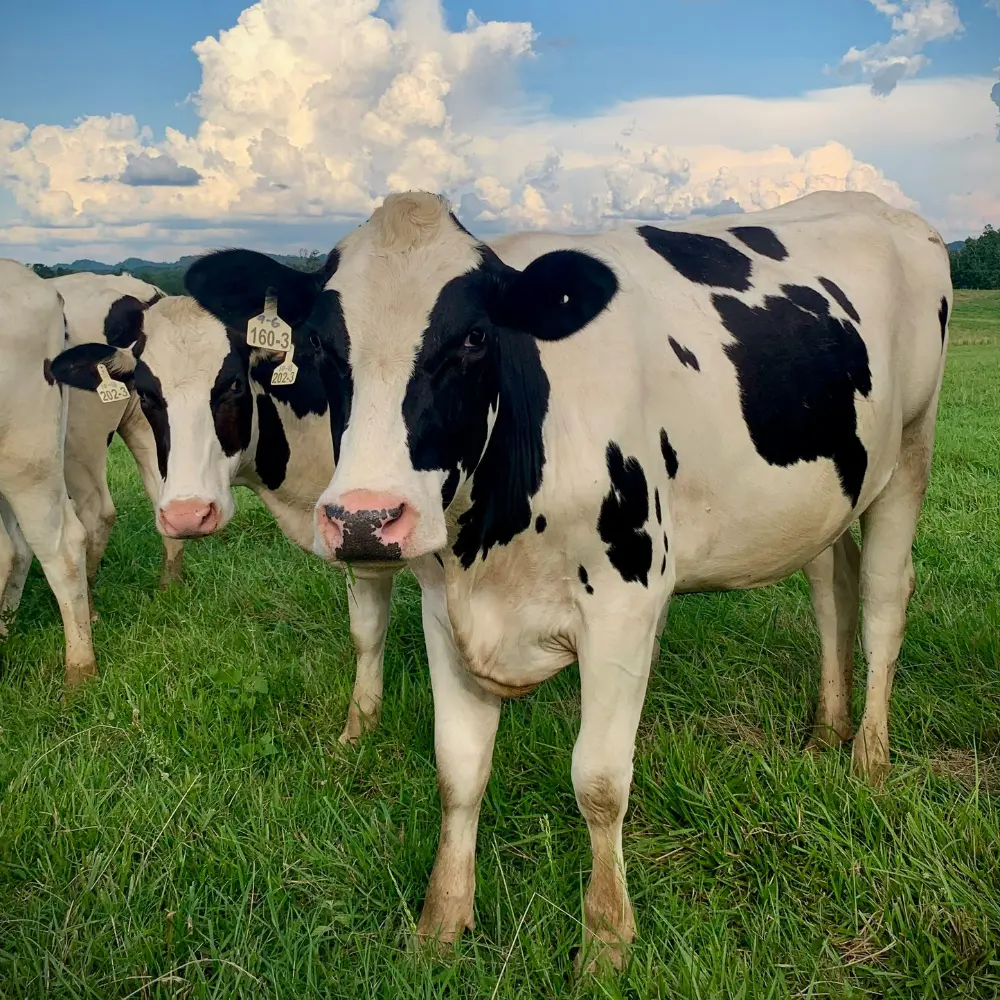
In some cases, tensions can arise. In farming, in particular, climate performance is often measured in emissions per unit produced. However, as I4CE highlights in its Carbon label assessment published in 2025, the Carbon’Agri methodology «encourages the optimisation of systems, but slows down the structural changes that are nevertheless necessary to achieve the agricultural sector's climate objectives». Steering performance through this single indicator can thus orient producers towards productive optimisation logic. This intensification then comes at the expense of more profound transformations such as a return to grassland systems or the maintenance of permanent pastures, which are precisely at the heart of a regenerative approach.
Conversely, certain practices beneficial for soil regeneration (such as the introduction of cover crops or the lengthening of crop rotations) can lead, in the short term, to a drop in productivity, thereby degrading carbon indicators per unit produced.
Common practices
However, a stark opposition between low-carbon agriculture and regenerative agriculture would be an oversimplification. In practice, both approaches are based on common practices: permanent soil cover, diversification of crop rotations, improved nitrogen management, and the integration of agroecological infrastructures. They also pursue a shared objective of farm resilience, both agronomically and economically.
Low-carbon agriculture often represents a first step towards engaging in the transition, by measuring indicators and formalising progress trajectories, with associated funding as a key incentive.
Regenerative agriculture, for its part, therefore does not replace this framework but extends it.
Data as a common language
As part of low-carbon initiatives, farms are already the subject of particularly rich data collection. At Carbone Farmers, a carbon assessment mobilises nearly 3,000 data points per farm, covering a wide spectrum of agronomic practices, soil characteristics, input use, and the organisation of production systems.
However, only a portion of this information is currently valued by low-carbon managers. The majority of the data collected is used to quantify greenhouse gas emissions and carbon storage. Conversely, other dimensions such as biodiversity, soil quality, or water management remain only partially exploited, or are relegated to the status of «co-benefits».
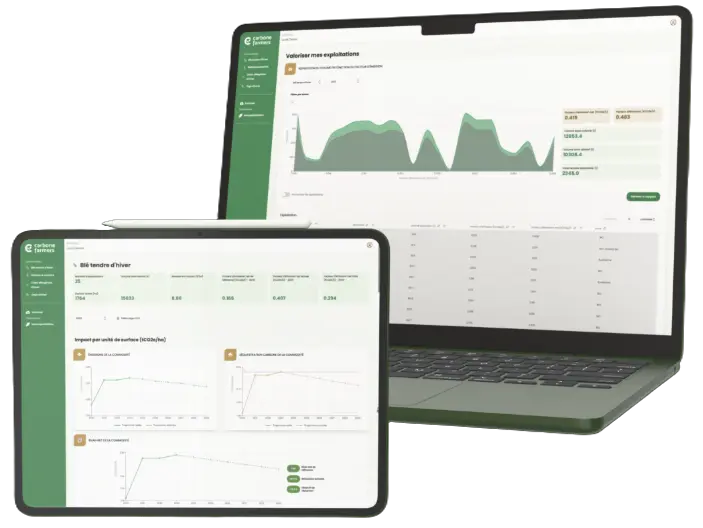
That's why our platform FarmGate Metrics, Certified to ISO 14067, it already displays around thirty indicators relating to biodiversity, water, air and soil quality, and farm resilience (such as changes in organic versus mineral inputs, the proportion of cover crops and crops of interest in crop rotation, or water resource use efficiency). In practice, we see that there is no need to produce new data. It is a matter of reorganising their harmonisation and valorisation by the industries.
The data already collected as part of low-carbon initiatives forms a good basis for feeding into broader regenerative agriculture frameworks.
A regulatory context that accelerates demand for data on several environmental areas
The CSRD directive, in force for large companies since 2024 and set to expand by 2027, requires companies to produce non-financial (ESG) reporting that incorporates the impacts of their activities on biodiversity, water, and soil, and not just on climate. In parallel, the framework SBTi FLAG (Forest, Land and Agriculture), published in September 2022, recommends that companies with land-related operations set specific decarbonisation targets for their agricultural value chain (Scope 3). By 2050, the methodology requires a reduction of at least 72 % in FLAG emissions.
These frameworks are creating a growing demand, from buyers and funders, for reliable, comparable, and multidimensional agricultural data.
Low-carbon initiatives, having already organised the collection and verification of data at the farm level, are well-placed to respond to this demand, provided their scope of analysis is expanded..
This also means evolving the technical support for farmers, which can be provided within this framework.. For example, by opting for a more systemic approach, paying attention to the consistency between the carbon performance of the different workshops and the environmental performance of the entire operation.
Make the practical applications converge
Regenerative agriculture and low-carbon agriculture are not mutually exclusive: Regenerative agriculture can be seen as the culmination of a transition path, initiated by a low-carbon approach.
The cap on GHG emissions has provided the framework: methodologies, measurement tools and financing mechanisms. The SNBC sets a target for the agricultural sector to reduce emissions by 46 % between 2015 and 2050. In our view, this pathway requires measures that go far beyond carbon optimisation.
Regenerative agriculture integrates what carbon alone doesn't accurately account for: soil health, biodiversity, and farm resilience. Therefore, the real question is not to choose between these two approaches, but rather to ensure that low-carbon strategies lead to reflections on the agricultural system as a whole.