
Much like carbon credits, which are envisioned to guide funding towards the decarbonisation of numerous sectors or the preservation and restoration of carbon sinks, the concept of biodiversity certificates appears as a solution for allocating private funding to biodiversity protection.
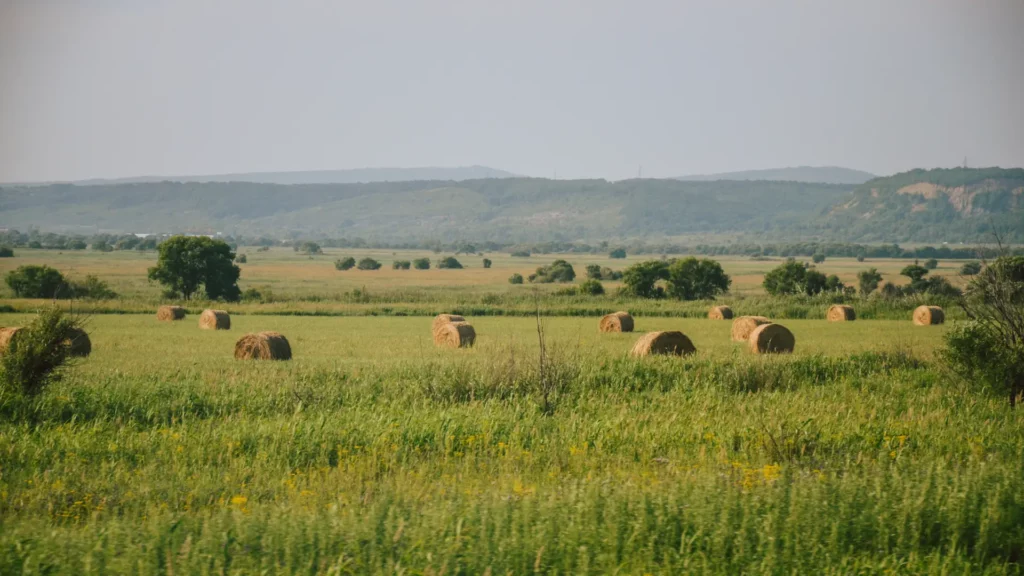
Agricultural land covers nearly half of French territory, making it a subject of close interest for the entire agricultural world. This is especially true as agriculture can have numerous positive environmental externalities, depending on the practices implemented.
Biodiversity credits or certificates: what exactly are we talking about?
The definition of biodiversity credits or certificates
A biodiversity certificate or credit is a mechanism that attests to and therefore finances positive environmental actions, based on quantified and certified «biodiversity gains».
This allows for proof that an action on the ground has helped to maintain or improve the good ecological status of a given ecosystem or area. In agriculture, this could be the restoration of hedges, the planting of permanent cover, the re-establishment of a wetland, the permanent removal of pesticides, etc.
A quick look at the terminology: should we say «credit» or «certificate»?
Actuellement, le terme « certificat » est préféré au terme de « crédit », pour souligner qu’il s’agit bien d’une logique de contribution : financer des gains pour la biodiversité sans prétendre pour autant annuler ses propres impacts négatifs.
A lineage and differences with carbon credits
The model appears to be inspired by carbon credits in that it:
- mobilise private funding to implement positive environmental actions
- guarantees additionality (meaning the restoration or conservation project would not have been possible otherwise)
- adopts a single logic of certification per unit (1 tonne of CO2e is certified VS 1 unit of biodiversity is certified)
- concerns the same type of actors: project initiators, certifiers, buyers…
The main difference, and indeed the main difficulty, lies in the absence of a universal metric for quantifying biodiversity.
It is easy to assess a tonne of CO2 not emitted or sequestered using the globally shared CO2e indicator. However, a gain in biodiversity is difficult to harmonise between different territories or different activities. What is the equivalent of restoring a forest in Brazil, destroying a wetland in the Camargue, or establishing meadows in the North of France?
This is also why experts considering the issue (Carbone 4, the National Museum of Natural History, the Foundation for Research on Biodiversity, among others) insist on the need to completely abandon the logic of compensation in favour of a logic of contribution. This would make it possible to avoid issuing credits that do not generate the claimed effects.
Quelle maturité du marché pour des crédits biodiversité ?
Un besoin évident de financements pour la biodiversité
According to the report Financing Nature According to the Paulson Institute, the annual deficit to achieve global biodiversity goals is between $700 billion and $942 billion per year. The Kunming-Montreal Agreement, however, adopted at COP15 in December 2022, sets the objective (target 19) of mobilising at least $200 billion per year by 2030, including a significant share of private finance.
However, according to the World Economic Forum, more than 50% of global GDP depends directly or indirectly on biodiversity. And 72% of European non-financial companies rely on ecosystem services, according to the European Central Bank. The question of nature financing is therefore more of a strategic and economic issue than an ethical one.
A burgeoning market, but slower growth than anticipated
On 20 April 2026, CDC Biodiversité and the European Investment Bank (EIB)) made public their study on the biodiversity market. Between 2022 and 2026, biodiversity certificates represented “just over five million dollars sold”Martin Vaqué, co-founder of Bloomlabs, which is approximately 6,800 transactions worldwide for a total of 170 projects.
Even though the trend is positive and the interest in this market is real, its growth has slowed down (with a rather low first quarter of 2026).
In its 2023 report, the World Economic Forum (WEF) was, on the contrary, quite optimistic about its market projections. In its most ambitious scenario, it anticipated a potential demand of up to 2 billion dollars by 2030, and up to 69 billion dollars by 2050. However, this scenario presupposes clear guidelines regarding environmental claims and the adoption of precise environmental objectives by the majority of companies, which is not yet the case.
The debate between compensation and contribution
This is the central question, and the one on which Carbone 4, the MNHN and the FRB have published the most in-depth analysis to date, in their study Biodiversity Certificates: Risks and Opportunities (September 2024).
The firm identifies 9 major risk categories:
- Perturbation of the attenuation hierarchy the possibility of ’cancelling« impacts reduces the incentive to avoid and reduce them upstream.
- Greenwashing Communication about good practices can mask negative impacts generated elsewhere.
- Regulatory delay An active voluntary market can give the illusion that «the market is taking care of it,» delaying the emergence of binding regulation.
- Methodological weaknesses Biodiversity is impossible to account for through a single indicator, and assessment methods are still under development (> 50 methodologies being developed worldwide in 2025).
- Risks of non-permanence gains (a restored environment can then be destroyed).
- Leakage risks the negative impacts move outside the certified zone.
- Asymmetric governance insufficient involvement of local stakeholders, unequal sharing of revenues, perverse incentives.
This is why the oversight of biodiversity credits, particularly project monitoring, is paramount.
What agricultural projects and practices would be concerned?
Although there is currently no single methodology for biodiversity certificates, numerous initiatives have emerged in recent years.
A wide variety of practices considered to have a positive impact on biodiversity overlap with those that can be valued within the framework of the Carbon Label, particularly as “co-benefits”.
Among them, we find:
- Permanent plant covers and diversified cover crops
- The lengthening and diversification of crop rotations
- The reduction or even elimination of soil tillage (conservation agriculture)
- The drastic reduction or elimination of synthetic inputs (plant protection products, nitrogen fertilisers)
- Associated cultures
- The planting and maintenance of hedgerows
- The creation and restoration of ponds
- The maintenance and restoration of grass strips, pollinator-friendly areas, and copses
- Dynamic rotational grazing, permanent or multi-species pastures
- Etc.
The emergence of methodologies and frameworks for biodiversity certificates
In France, initiatives are looking into the subject
In France, several initiatives are working in parallel on measuring these biodiversity gains:
- The IAPB (International Advisory Panel for Biodiversity Credits), initiated by France and the United Kingdom in 2023, published in October 2024 a Global framework for biodiversity credit markets.
- The OBC (Organisation for Biodiversity Certificate), in partnership with Carbone 4, the MNHN and the FRB, develop a methodology based on the biodiversity capacity of a territory, broken down by homogeneous ecosystem categories. There is no fixed numerical unit but a final score that results from key practices contributing to increasing biodiversity, for each type of ecosystem and land use. Each is scored out of 5, this gain in biodiversity being determined by scientific consensus. For the moment, the methodology has only been developed and tested on two ecosystems: agriculture and managed forests in temperate zones.
- Noah and Agoterra testing between 2025 and 2030 this method Out of 30 voluntary farms, with a 17-theme evaluation grid in an agricultural setting. They are based on the methodology mentioned in the previous point.
- WWF France launched its « living credits »combining certified carbon credits, biodiversity certificates, and support for conversion to organic and regenerative agriculture, with an indicator developed specifically to measure the impact of practices.
- The CDC biodiversity is considering a standard for the voluntary biodiversity credit market. In spring 2023, it launched a working group dedicated to biodiversity credits within its B4B+ Club, with a timeline of at least three years, focusing on measurement accuracy, field verification, and ecological equivalence.
International private methodologies
Private international initiatives, meanwhile, are already well advanced in developing their methodologies. To name only the main ones, which are already active in certifying biodiversity credits, with an international target:
- SD Vista Nature Framework of Verra Certification effective from the beginning of 2026. Metric used: 1 Quality Hectare (Qha), ranging between 0 and 1, equivalent to biodiversity progress compared to a baseline, resulting from the project's intervention.
- The Wallacea Trust : Metric: 1 % of biodiversity improvement or loss prevention per hectare. This represents the median change in % across a set of biodiversity metrics that reflect the conservation objectives for the project site. The metrics selected are therefore specific to each project.
- PV Nature from Plan Vivo : This methodology was inspired by that of the Wallacea Trust in its early days. The metric adopted is a basket of metrics that defines a % variation per hectare per year. It applies to both restoration and conservation projects, covering both terrestrial and marine environments. Certified projects result in the issuance of Plan Vivo biodiversity certificates (PVBC).
- Terrasos developed its unit: the Sugarcane, representing 10 m² of conserved and restored ecosystems over 30 years. Buying 1 Tebu therefore guarantees the protection of 10 m² of a threatened ecosystem for 30 years. The metric used is the physical area weighted by the level of threat to the ecosystem, ecological connectivity, and community involvement.
The French SNCRRs, for Sites of Natural Compensation, Restoration and Renaturation, a unique system in Europe
Regulatory framework for the SNCRR
With regard to French regulations, the Green Industry Act of 23 October 2023 created the Natural Compensation, Restoration and Rewilding Sites (SNCRR), a mechanism presented by the government as the first national biodiversity credit scheme. The implementing decrees were published in November 2024.
This device aims to facilitate and accelerate voluntary biodiversity restoration and renaturation operations, in order to mobilise public and private funding for these actions.
However, the predecessors of SNCRRs, the SNCs (Natural Compensation Sites), were conceived as instruments of regulatory compensation, rather than voluntary contributions like the private initiatives mentioned previously. Nevertheless, since the Green Industry Law, SNCRRs can be sold as voluntary contributions and no longer solely as mandatory compensation.
These multi-functional sites allow for the generation of Offsetting, Restoration, or Re-naturing Units (UCRR), valid for at least 30 years, which can be purchased:
- by project owners to meet their regulatory compensation obligations (avoid-reduce-compensate); ;
- by companies or local authorities wishing to voluntarily contribute to nature restoration as part of their CSR strategy.
Regarding agriculture (the subject that interests us!), agricultural plots located within an SNCRR could be subject to agreements with their operators for the implementation of biodiversity-friendly practices (hedges, ponds, pesticide removal, etc.). This is an opportunity for funding to keep an eye on. However, agricultural professional organisations remain wary of the risks of land speculation that could result from this.
Mise en oeuvre opérationnelle des SNCRR : le cas de CDC biodiversité x Removall
The CDC Biodiversité is the first organisation to have certified SNCRR sites. It has owned the Cossure site in the Crau plain since 2008, where it has rehabilitated 357 hectares of former industrial orchards into Mediterranean steppe. It is the first natural compensation site to have obtained ministerial approval in 2020, and all of whose units have since been sold.
A second site, the SNCRR of Cros du Mouton in the Var region, also supported by CDC Biodiversité, was accredited in June 2024. These two sites generate UCRRs (Compensation, Restoration and Renaturation Units), with each unit corresponding to 1 hectare of land restored, managed and monitored for 30 years.
Enfin, en mars 2025, CDC Biodiversité a signé un partenariat avec la Banque Européenne d’Investissement pour identifier les attentes des investisseurs du marché volontaire et aux côtés de Removall accompagner l’émergence des premiers crédits biodiversité volontaires adossés aux SNCRR.
The link with environmental reporting: standards that integrate biodiversity
CSRD and biodiversity reporting
The ESRS E4 standard of the CSRD
The CSRD directive (Corporate Sustainability Reporting Directive), which comes into effect in 2025 for the first companies concerned, integrates a specific standard for biodiversity: ESRS E4, on Biodiversity and Ecosystems.
If biodiversity is considered material to a company via the double materiality assessment, it is required to publish:
- its consideration of the impacts, dependencies, risks and opportunities related to biodiversity
- Its biodiversity transition plan (objectives, trajectory, means, governance)
- its formalised engagement policies
- their concrete actions (on their own operations and in their value chain)
- its quantifiable indicators (sites in sensitive areas, species concerned, state of ecosystems...).
Please note that companies with fewer than 750 employees can defer the implementation of ESRS E4 by two years on biodiversity.
What is the link to biodiversity certificates?
To the extent that a company has been able to identify its impact on biodiversity and choose concrete actions to implement within its value chain, it can also opt for contribution credits as a supplement.
Biodiversity certificates are therefore a good opportunity to come
- To attest to a trajectory of reducing environmental impacts, without substituting for direct impacts.
- Financing projects within their upstream value chain, with certified traceability for reporting.
However, CSRD relief (February 2025 Omnibus Directive) delays the expected effects of reporting on demand for biodiversity certificates.
Links with other frameworks and obligations
Beyond the CSRD, biodiversity certificates can fall within the scope of several regulations or obligations:
- Voluntary commitments: the OFB's «Businesses Committed for Nature» initiative (which has over 200 members in France), Ademe's ACT Biodiversity, SBTN programmes, TNFD alignments.
- La norme ISO 17298 (publiée en octobre 2025), première norme ISO dédiée à la biodiversité en entreprise, qui propose un vocabulaire commun et des exigences mesurables compatibles CSRD/TNFD/SBTN.
- Le règlement européen Restauration de la nature (Nature Restoration Law), entré en vigueur en 2024, qui fixe des objectifs contraignants par État membre.
- Le Zéro Artificialisation Nette (ZAN) à horizon 2050, qui va profondément bousculer l’aménagement du territoire.
- La Stratégie nationale Biodiversité 2030 française.
- Le Label bas carbone, qui nous intéresse particulièrement pour son lien avec le secteur agricole.
Si vous vous intéressez aux crédits carbone avec un fort accent sur la biodiversité, n’hésitez pas à nous contacter !