
Introduced in the 1960s, the CAP has become a significant source of support for European farms. It is also an effective tool for steering agriculture toward ecological transition. Here’s a look back at the main developments in the CAP from its inception to the present day.
1962: The Birth of the CAP
Conceived by the European Union in 1962, the Common Agricultural Policy (CAP) was designed to develop a competitive agricultural sector capable of supplying its member states with food (which was not yet the case at that time). The goal was therefore to provide products that were affordable for consumers and profitable enough for farmers to ensure them a fair standard of living.
The system in place at that time provides a subsidy per ton of food delivered.
As a result, European agriculture is being pushed to produce more, leading to the modernization of farming practices, particularly through increased mechanization and land consolidation.
Supply soon began to outstrip demand, and by the 1970s, quotas were introduced to regulate production.
1992, the first major reform
In 1992, the CAP took a new direction, shifting from market access support to producer support.
The goal was to reduce the overall CAP budget by shifting to direct income support that is proportional to farm size and a reference yield.
This new development in CAP payments is therefore encouraging some producers to expand their Utilized Agricultural Area (UAA).
2000: A reevaluation of the CAP system
However, in the early 2000s, the legitimacy of the CAP came under scrutiny. Its significant share of the European Union budget, along with its strong focus on productivity, led to a new reform.
This reform has several objectives:
; lower guaranteed prices to narrow the gap with world market prices;
; raise awareness of environmental protection and food safety;
; demonstrate the wide range of functions that agriculture fulfills in order to justify the inclusion of this European aid in the EU budget.
2003: A Reform for a More Sustainable Agriculture
In 2003, the CAP shifted toward a more “sustainable” approach to agriculture. It decoupled production from subsidies by replacing its direct support system with a single payment per farm, regardless of production.
This led to the Single Payment Scheme (SPS), which is now based on historical data from the 2000, 2001, and 2002 harvest years. The aim of this European initiative was to stop influencing production.
This decision has sparked a great deal of debate, particularly among agricultural unions, which view it more as a form of welfare than anything else.
This new payment is also subject to the cross-compliance rules that have been implemented. French farmers who receive one or more types of aid are subject to checks to ensure compliance with regulatory requirements in the areas of the environment, public health, plant health, and animal welfare.
2014, Payment Services Directive Reform
In 2014, a new reform was introduced, replacing, among other things, the Single Farm Payments (which were based on an old reference system) with the Basic Payment Entitlements (BPE).
The DPBs operate on the principle of “decoupled payments.” That is, a flat rate per hectare for eligible areas of the UAA that is independent of the type of agricultural production.
The new CAP for 2023–2027 and the objectives of the EU Green Deal
The new CAP for 2023–2027 aims to help the agricultural sector achieve the goals of the European Green Deal, which includes the goal of achieving net-zero greenhouse gas emissions by 2050.
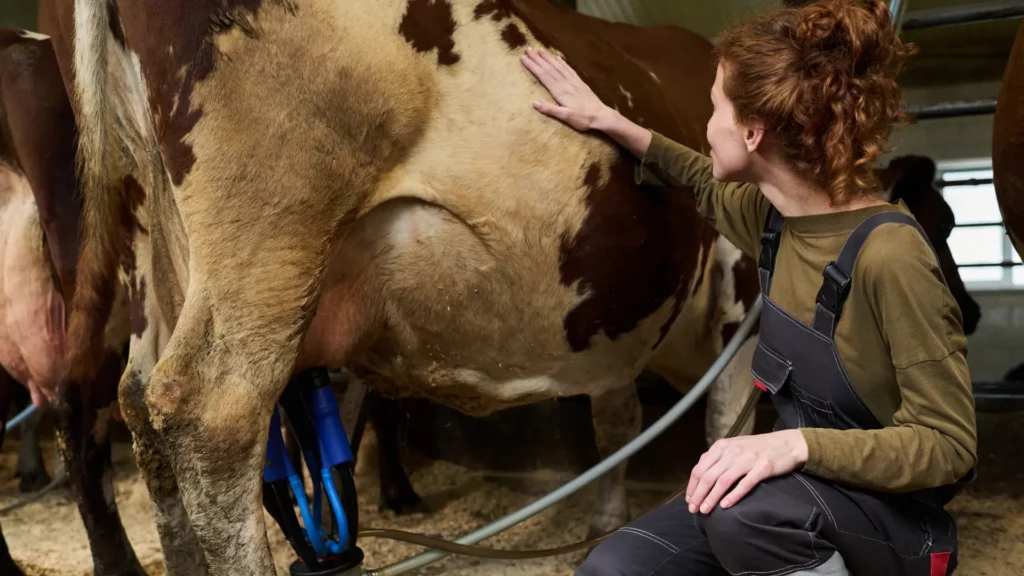
The first major change in this new CAP concerns the livestock sector, specifically dairy and beef cattle farms, with the replacement of payments based on the number of animals with payments based on the Livestock Unit (LU).
The second major development is the introduction of eco-schemes, which are voluntary but receive financial support.
There are three categories of eco-schemes that cannot be combined:
through agricultural practices (diversification, cover crops between rows in vineyards and orchards, permanent grasslands, etc.),
through certification (organic farming or environmental certification of farms, etc.),
through features that promote biodiversity (hedges and copses, agro-environmental infrastructure, etc.).
For each category, there are two payment levels: €60/ha or €82/ha, depending on whether certain criteria are met.
The CAP 2023–2027 includes a number of reforms aimed at supporting the transition to sustainable agriculture in the EU.
As a result, a large portion of the budget is allocated to environmental programs that further promote climate- and environmentally friendly agricultural practices and methods, with a strong focus on biodiversity and climate.