
In the context of greenhouse gas (GHG) emission reduction and climate change adaptation, carbon storage in soils plays a key role. Indeed, agricultural and forest soils have the particularity of being able to sequester carbon in a biogenic form.
What is carbon sequestration?
Carbon sequestration involves two processes: the absorption of atmospheric CO2 by plants, and the storage of carbon in the soil's organic matter. Indeed, a plant absorbs carbon through photosynthesis. When it decomposes in the soil, it returns its carbon to the soil in the form of organic matter.
Thanks to this plant-soil interaction, soil constitutes a powerful carbon sink. With a reservoir of 1500 billion tonnes of carbon, the storage potential of global soils is considerable.
How does carbon storage in soils work?
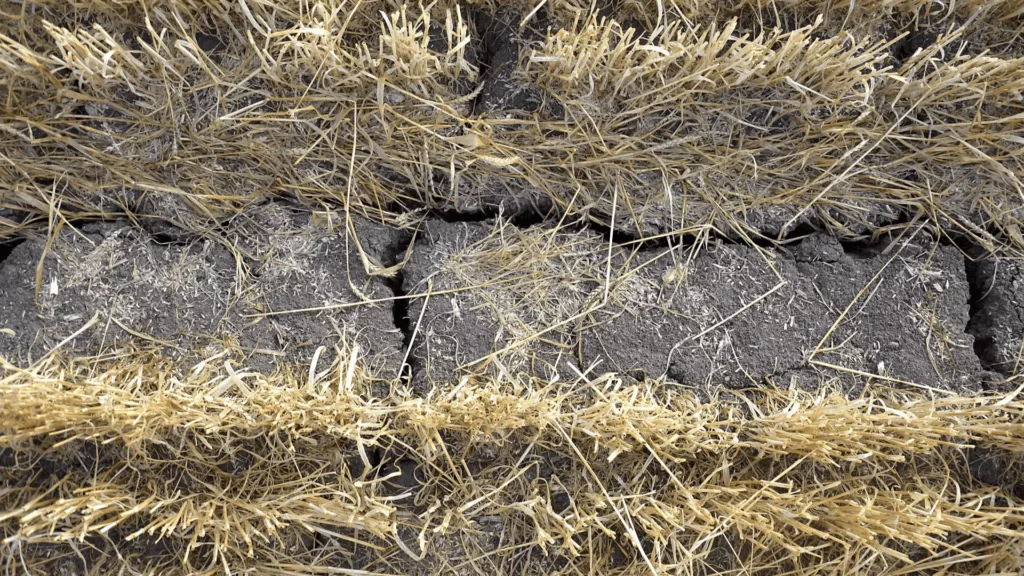
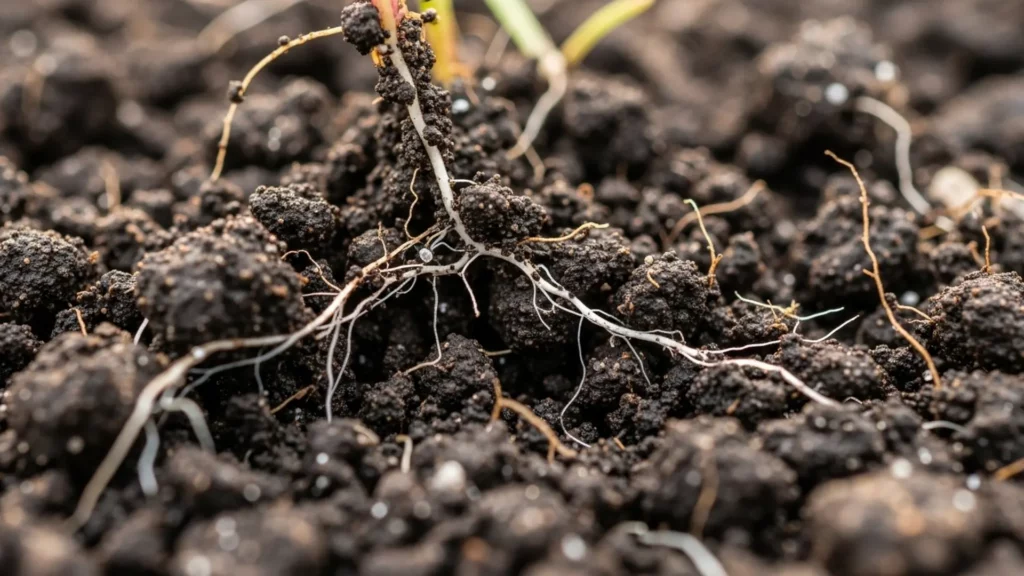
Organic matter is the main form of carbon storage in soils. It consists of dead plants and micro-organisms. In agricultural soils, it can be enriched by crop residues and organic fertilisation.
The recommended organic matter content of agricultural soil ranges from 2 to 31% by weight, depending on the soil texture.
Once on the ground, organic matter is decomposed and mineralised by decomposer organisms such as fungi, bacteria, or earthworms.
Mineralisation is the transformation of organic matter into mineral matter, in other words methane (CH4), carbon dioxide (CO2), water and nutrients.
Following this mineralisation, this mineral matter is then released into the atmosphere. As all organic matter is destined to be mineralised, the permanent storage of organic carbon in soils is therefore prevented. The storage duration, on average, does not exceed a few decades.
Le stockage de carbone présente plusieurs avantages, principalement axés sur la lutte contre le changement climatique : * **Atténuation du changement climatique :** L’objectif principal du stockage de carbone est de réduire la quantité de dioxyde de carbone (CO2) et d’autres gaz à effet de serre dans l’atmosphère. En capturant le CO2 à la source (par exemple, des centrales électriques ou des installations industrielles) ou directement dans l’air, on peut éviter qu’il ne contribue au réchauffement de la planète. * **Réduction des émissions :** Le stockage de carbone permet aux industries qui produisent des émissions importantes, telles que la production d’électricité à partir de combustibles fossiles ou les processus industriels lourds, de continuer à fonctionner tout en réduisant de manière significative leur empreinte carbone. Cela offre une voie de transition vers des sources d’énergie plus propres. * **Valorisation du CO2 :** Le CO2 capturé peut être réutilisé dans une variété de processus industriels. Il peut être utilisé pour produire des carburants synthétiques, des matériaux de construction, des plastiques, des produits chimiques, ou encore injecté dans des réservoirs pétroliers pour améliorer la récupération de pétrole (EOR - Enhanced Oil Recovery). Cette valorisation peut rendre le processus de capture et de stockage économiquement plus viable. * **Potentiel de stockage durable :** Le CO2 peut être stocké de manière permanente dans des formations géologiques profondes, comme les aquifères salins ou les gisements de pétrole et de gaz épuisés. Ces sites sont sélectionnés pour leur capacité à contenir le CO2 en toute sécurité pendant de longues périodes. * **Soutien aux technologies vertes :** Le stockage de carbone est souvent considéré comme une technologie complémentaire aux énergies renouvelables. Il peut aider à compenser les émissions intermittentes des sources renouvelables et à permettre une transition énergétique plus souple. * **Gestion des émissions historiques :** Les technologies de capture directe dans l’air (DAC - Direct Air Capture), associées au stockage de carbone, offrent la possibilité de retirer le CO2 de l’atmosphère qui s’y trouve déjà, contribuant ainsi à inverser le réchauffement. Il est important de noter que le stockage de carbone n’est pas sans défis, notamment en termes de coûts, d’efficacité énergétique, d’acceptation publique et de nécessité de surveillance à long terme pour garantir la sécurité du stockage. Cependant, il reste un outil important dans l’arsenal des solutions pour lutter contre le changement climatique.
As a reminder, the Paris Agreement of 2015 set the goal of keeping the rise in global average temperature below 1.5°C.
With this in mind, the world's leading organisations have committed to achieving net-zero emissions by 2050. In other words, greenhouse gas emissions would be offset by their capture via carbon sinks.
By trapping atmospheric carbon, soils therefore play a decisive role in reducing greenhouse gas emissions. The greater the carbon storage in soils, the lower the amount of CO2 in the atmosphere.
Comment augmenter le stockage de carbone dans le sol ?
Agronomic techniques such as agroforestry or the implementation of cover crops can help increase carbon storage in soils.
Agroforestry involves integrating trees into arable fields.
However, certain practices can affect soil quality and degrade carbon stocks. For example: the urbanisation of arable land, the intensification of production methods, changes in land use by cultivating grassland, or excessive and ill-considered biomass removal.
Certain other practices can be depleting, such as deep ploughing or the export of crop residues.
What is France's position in terms of carbon sequestration?
France is a pioneer in promoting carbon sequestration in soils as a solution to climate change.
For example, it includes the ‘4 per 1000’ initiative launched in 2015 at COP21. This involves offsetting all annual emissions from human activities – which currently account for 4 per 1000 of the planet’s soil carbon stock – by increasing soil carbon levels by 0.4% each year.
Soils therefore represent a fundamental lever that must be integrated into climate change mitigation strategies. Increasing the carbon stock in soils means reducing the amount of greenhouse gases in the atmosphere.
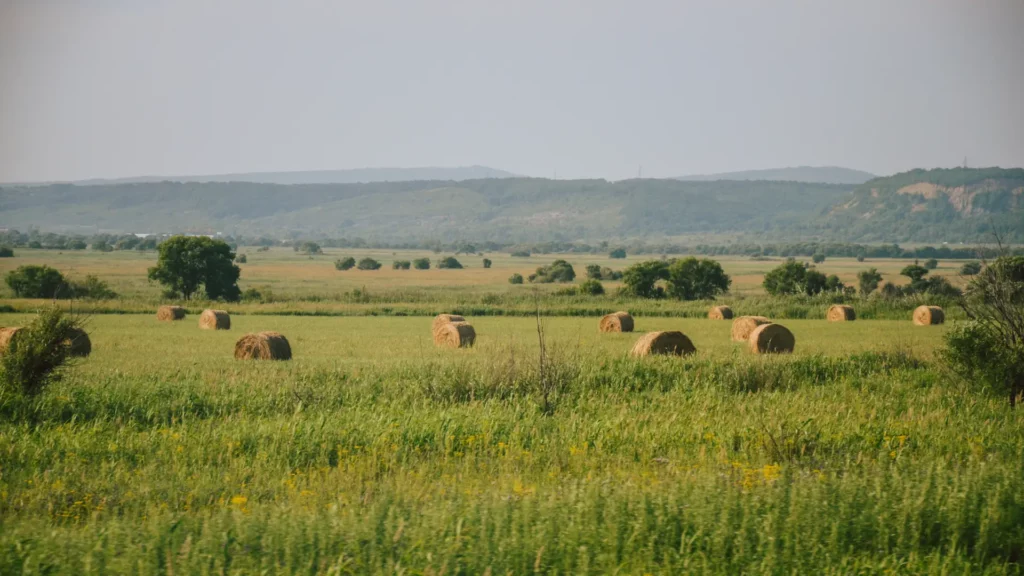
Farmers are therefore key players in soil carbon stock management, particularly by promoting or not promoting the input of organic matter and plant cover on their farms.
Sources
Carbon storage in soils and climate change
Soils, carbon sinks, and climate actors
Carbon sequestration in agricultural soils
and the forests of the community of agglomeration