Regional Energy Independence Project – Biogas

The project

Location: Burgundy

Surface area: 21,050 ha

Engaged Farmers: 77

Methodology: Arable farming

Type: Collective

Tracking: 2024 – 2029 / 2025 – 2030

Total CO2 reductions

27370t

CO₂ icon representing carbon emission reduction

Carbon credits available

26484

Medal icon symbolising recognition and quality

Discounts

921t

Loop icon representing a continuous cycle

Storage

28291t

Layer icon representing a structure or level

Regional Energy Independence Project – Biogas

27370t

CO₂ icon representing carbon emission reduction

Total CO2 reductions

26484

Medal icon symbolising recognition and quality

Carbon credits available

921t

Target icon representing a goal

Discounts

28291t

Layer icon representing a structure or level

Storage

The project

Location: Burgundy

Surface area: 21,050 ha

Engaged Farmers: 77

Methodology: Arable farming

Type: Collective

Tracking: 2024 – 2029 / 2025 – 2030

The Project In a few words

Alliance BFC brings together three agricultural cooperatives – Bourgogne du Sud, Dijon Céréales, and Terre Comtoise – representing 12,000 farmers in Bourgogne-Franche-Comté. One of its flagship projects, Sécalia, is a methanisation unit inaugurated in 2024 in Cérilly, processing 180,000 tonnes of biomass from intermediate energy crops (CIVE) to produce 230 GWh of biomethane injected into the grid. The Carbone Farmers – Sécalia project, awarded the Label Bas Carbone certification, involves arable farms located in the north of Côte-d’Or. The practices adopted, namely cover crops, no-till farming, organic fertilisation, and lengthening crop rotations, aim to store more carbon in the soil and reduce greenhouse gas emissions, with an estimated potential of 27,390 tonnes of CO₂ avoided.

Levers deployed

100 %

Adoption of intermediate cutlery

84 %

Introduction of legumes or evolution of crop rotation

83 %

Use of less volatile fertilisers

81 %

Use of organic fertilisers

Theirs Testimonial

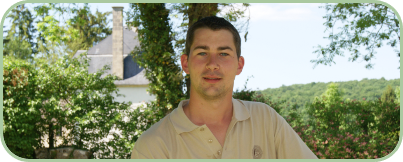
Thanks to the agronomic advice from the Carbone Farmers engineers, I've been able to evolve my farming practices towards greater sustainability. The introduction of cover crops and reduced soil tillage have not only improved the fertility of my land but also strengthened its resilience to climate hazards. It's genuinely satisfying to contribute to CO₂ emission reduction while building a more sustainable agriculture for the future.

Maxime Verslype

Farmer based in Courban

The Co-benefits of the project

01

Air quality

-7%: positive impact on air quality due to reduced fertiliser use, made possible by the nitrogen contributed to the soil by protein peas.

02

Water quality

– 11% improves water quality by reducing tillage and enhancing soil filtration.

03

Fossil fuel consumption

Non-renewable energy consumption

04

Water consumption

Reduced water consumption thanks to these protein peas which do not require water.

05

Soil quality

– 10%: improving soil quality through the introduction of catch crops that help to restructure the soil.

06

Biodiversity

Impact on the development of life in soils and helps to restore the balance of fauna and flora

Contribution du projet aux ODD

The project guarantees French food sovereignty by providing the necessary calories to feed 86,050 people per year.
The project contributes to French food sovereignty by enabling the relocation of fodder crops, which are often purchased from neighbouring regions. Furthermore, current production levels are maintained, covering the protein needs of 236,200 people.
By introducing protein peas, the project helps to reduce the proportion of more emissive crops and to substitute animal protein for a healthier plant-based protein.
The crops that will be introduced will help to enrich and revitalise the soil, allowing for the use of fewer synthetic products and thus for healthy production for farmers and consumers.
Reducing synthetic products and improving soil resilience helps reduce nitrate leaching, which pollutes groundwater.
Reducing synthetic products allows for the reduction of nitrate leaching, which pollutes groundwater. Furthermore, recycling water from the digestor will make it possible to irrigate 45 hectares of hazelnut trees.
The project offers new outlets for farmers (legumes, flax, chicory, etc.), stimulates the local economy and improves farmers' incomes.
By introducing rye and maintaining current production levels, the project will create 50 permanent, non-relocatable jobs in Bourgogne Franche-Comté.
The project allows for the stimulation of sustainable industries and responsible production practices for cereals, beetroot, wheat, and textiles.
In addition to responsible biogas production, the project aims for a significant reduction, or even elimination, of the use of plant protection products through the introduction of rye (a cleansing plant) into crop rotations.
This is the core of the project, the fight against global warming and the development of carbon sinks. Over its entire duration, the project avoids or sequesters 37,001 tCO2e, which is the equivalent of emissions from approximately 3,700 French people over one year.
Rye cultivation captures CO2 from the atmosphere and fixes it in the soil. Nearly 18,500 tCO2e will be captured and sequestered in agricultural soils over the 5 years of the project.
The project will help preserve terrestrial biodiversity by increasing the input of organic matter into the soil and restoring the biomass of vegetation covers.
The project will help preserve terrestrial biodiversity by reducing pesticide use and developing crops that encourage the return of pollinators (spring crops).

Book an appointment with a Carbone Farmers expert

Accelerate your climate strategy by discovering how to invest in local, traceable, and high-impact territorial agroecological projects.

In 20 minutes, we'll analyse your situation, your carbon investment goals and present the most suitable agricultural projects for your organisation.