Established in 2013, the Producer Organisation Bio Communications (formerly OP Seine et Loire) federates nearly 500 dairy farms certified Organic Farming.
Spanning three French regions – Brittany, Normandy, and Pays de la Loire – the OP manages the marketing of milk, approximately 200 million litres of organic cow's milk, to seven private dairies in western France. Its status gives it a cross-sectoral position among major players in the dairy processing sector. One of its missions is to ensure the development of a responsible industry.
To this end, OP Bio Commun has embarked on an ambitious project aimed at addressing the sector's decarbonisation challenges. It is in this context that the collaboration with Carbone Farmers was born.
The project carried out with Carbone Farmers was exploratory and pilot-driven from the outset. Unlike approaches aiming for immediate deployment of Low-carbon label, the initial objective was above all to identify the carbon footprint of farms and to assess the strategic relevance of a low-carbon commitment for an organic dairy producer organisation.
In 2025, around thirty carbon diagnostics were carried out on organic dairy farms located in Brittany and Normandy, according to the CAP’2ER methodology Level 2, recommended by the Low Carbon Label. This first phase focused on measuring the milk's carbon emission factor and identifying realistic development trajectories over a five-year horizon.
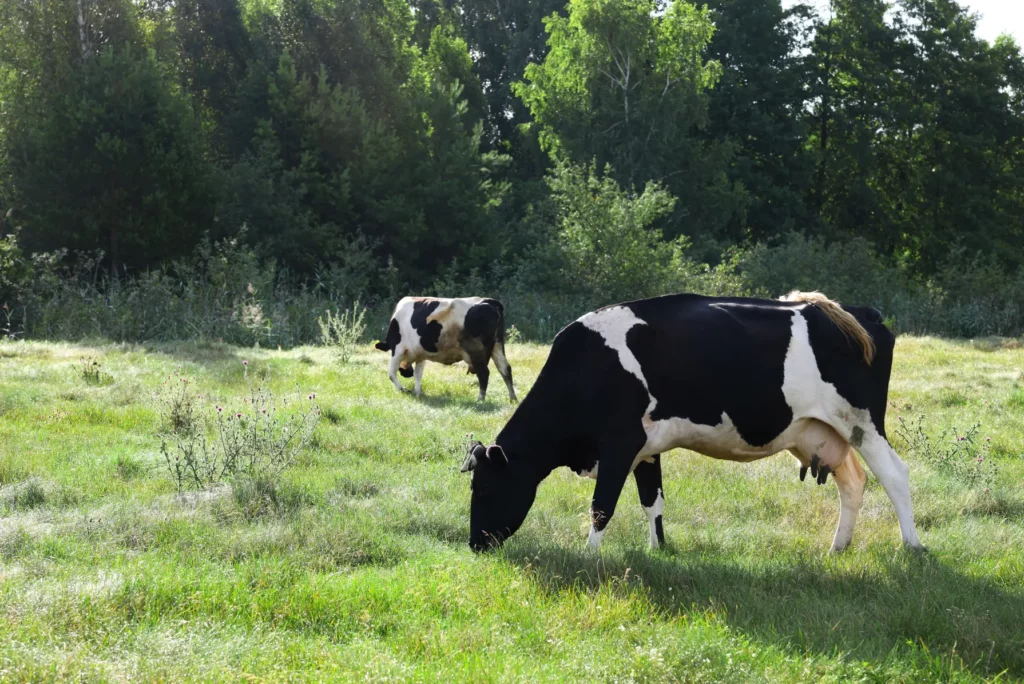
The results confirm that organic farming systems have low emission factors and significant carbon sequestration. This is partly due to the fact that the farmers’ organisation has introduced a production charter aimed at maximising the proportion of grass in forage systems. This Charter ensures a minimum of 75 tonnes of grass in forage areas, at least 20 ares of land accessible for grazing by cows, and any supplementary feed, where provided, guaranteed to be 100% of French origin. The combination of Organic Farming certification and the application of the Production Charter ensures high performance in terms of reducing the net carbon footprint and enables the PO to adopt a low-carbon approach and promote these results.
Carbone Farmers' support enables us to establish measurement capabilities through FarmGate Metrics, a tool designed to calculate carbon emissions and storage. In this context, it will enable the generation of homogeneous milk emission factor certificates, usable by producers, their cooperatives, and downstream stakeholders. Therefore, for Bio Commun, the low-carbon objective lies at 3 levels:
Bio Commun now has a shared indicator for dialogue with dairies, reporting on the carbon performance of organic milk, and informing discussions on structuring supply chains through the environmental aspect of its CSR strategy.
This website uses cookies to ensure it functions correctly, to measure its audience, and to improve its performance.
You can accept, refuse, or personalise the use of cookies at any time.